Wright – Meaning of the Name

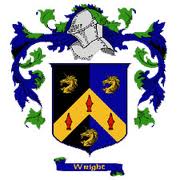
The Wright Family Crest

The Wright Family Crest

English, Scottish, and northern Irish: occupational name for a maker of machinery, mostly in wood, of any of a wide range of kinds, from Old English wyrhta, wryhta ‘craftsman’ (a derivative of wyrcan ‘to work or make’). The term is found in various combinations (for example, Cartwright and Wainwright), but when used in isolation it generally referred to a builder of windmills or watermills. MacIntyre is the Scottish version, meaning “son of the carpenter”; the latter, of French origin, was eventually incorporated into English and took the meaning that wryhta had.

Posted in Wright | Tagged , | Leave a comment

Wright – Wright Bridge

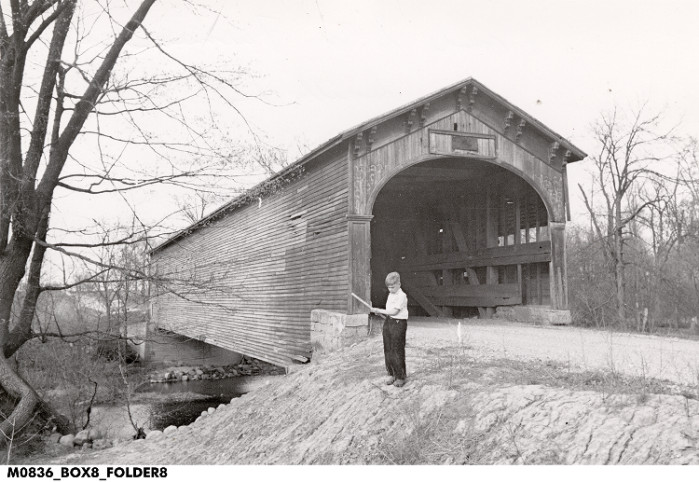
Wright Bridge. Picture taken in 1960 by the father of Thomas Keesling.

Wright Bridge. Picture taken in 1960 by James Keesling.

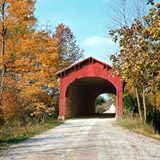
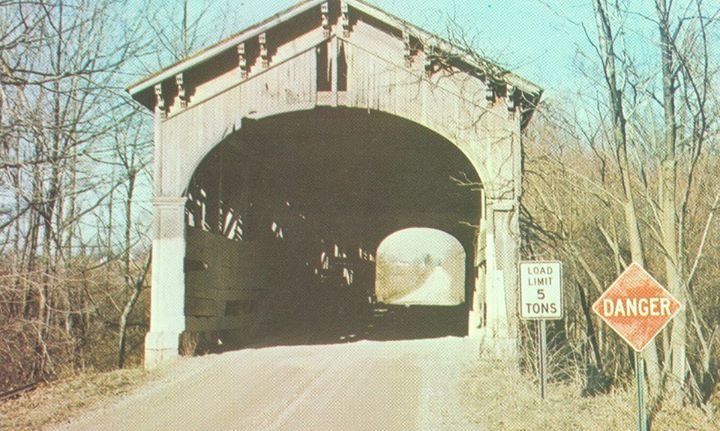
Wright Bridge - Built 1883 near Farmland over west fork of White River. Destroyed by fire in 1966. Picture contributed by Debbie Manning Grubbs.

Wright Bridge – Built 1883 near Farmland over west fork of White River. Destroyed by fire in 1966. Picture contributed by Debbie Manning Grubbs.

Wright Covered Bridge, one mile SW of Farmland Indiana

Wright Covered Bridge, one mile SW of Farmland Indiana

The Wright Covered Bridge is no longer standing … it crossed the West Fork of White River on County Road North 900 West in Randolph County. This single span Burr Arch Truss structure had a length of 113 feet, or 133 feet including the 10-foot overhang at each end, with a portal clearance 16 feet wide by 13 feet high. This structure was one of 3 bridges built in Randolph County during 1883 by Archibald M. Kennedy & Sons at a cost of “eighteen dollars per lineal foot measuring the upper chord” (not including the cost of abutments). The Wright Covered Bridge was located near the property of William Wright and all timbers were of white pine except where they came in contact with stone and that was of oak; the double floors were constructed from two inch oak lined with one inch oak and spiked; the siding was split poplar; and the 18 inch shingles were pine; it was lost October 13, 1966. (Arson) George Gould identified a World Guide number of 14-68-02 for the Wright Covered Bridge in his book “Indiana Covered Bridges Thru the Years,” published in 1977 by the Indiana Covered Bridge Society, Inc. In the February 1941 “Indiana History Bulletin” Robert B. Yule and Richard C. Smith assigned the designation “kb” to this Covered Timber Bridge located between Sections 23 and 24, Township 20 North, and Range 12 East, one mile southwest of Farmland.

The Wright family is huge in the Farmland area. William Wright was my 2nd cousin, 2 times removed.  My great grandfather, Everett Wright was only 13 at this time and he was living nearby with his parents and siblings.

Posted in Wright | Tagged , , | Leave a comment

Wright – Blue Jacket

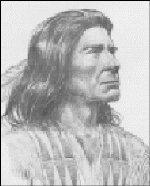
bluejacketMy maternal grandmother, Martha Marie Wright Tennant, tells the story of her family’s move from Indiana to Oklahoma when she was about six years old. That would make it in 1907. They first stopped in the area called Blue Jacket for a short time then permanently settled near Vinita. I’ve always loved the name Blue Jacket and wondered where it came from. While reading a book on the early settlers of Randolph County, I came upon the probable answer.

One of the Indian chiefs listed as living in the area was one named Blue Jacket. Here is the story that I took from Wikipedia:

“Blue Jacket or Weyapiersenwah (c. 1743 – c. 1810) was a war chief of the Shawnee people, known for his militant defense of Shawnee lands in the Ohio Country. Perhaps the preeminent American Indian leader in the Northwest Indian War, in which a pan-tribal confederacy fought several battles with the nascent United States, he was an important predecessor of the famous Shawnee leader Tecumseh.

Little is known of Blue Jacket’s early life. He first appears in written historical records in 1773, when he was already a grown man and a war chief. In that year, a British missionary visited the Shawnee villages on the Scioto River and recorded the location of Blue Jacket’s Town on Deer Creek (present Ross County, Ohio).

Blue Jacket participated in Dunmore’s War and the American Revolutionary War (allied with the British), always attempting to maintain Shawnee land rights. With the British defeat in the American Revolutionary War, the Shawnee lost valuable assistance in defending the Ohio Country. The struggle continued as white settlement in Ohio escalated, and Blue Jacket was a prominent leader of the resistance.

On November 3, 1791, the army of a confederation of Indian tribes, led by Blue Jacket and Miami Chief Little Turtle, defeated an American expedition led by Arthur St. Clair, governor of the Northwest Territory. The engagement, known as the Battle of the Wabash or as St. Clair’s Defeat, was the crowning achievement of Blue Jacket’s military career, and the most severe defeat ever inflicted upon the United States by Native Americans.

Blue Jacket’s triumph was short-lived. The Americans were alarmed by St. Clair’s disaster and raised a new professional army, commanded by General Anthony Wayne. On August 20, 1794, Blue Jacket’s confederate army clashed with Wayne at the Battle of Fallen Timbers, just south of present-day Toledo, Ohio. Blue Jacket’s army was defeated, and he was compelled to sign the Treaty of Greenville on August 3, 1795, ceding much of present-day Ohio to the United States.

In 1805, Blue Jacket also signed the Treaty of Fort Industry, relinquishing even more of Ohio. In Blue Jacket’s final years, he saw the rise to prominence of Tecumseh, who would take up the banner and make the final attempts to reclaim Shawnee lands in the Ohio Country.”

Don’t be confused by the use of ‘Ohio country’ in this article. The Ohio Country (sometimes called the Ohio Territory or Ohio Valley by the French) was the name used in the 18th century for the regions of North America west of the Appalachian Mountains and in the region of the upper Ohio River south of Lake Erie.  So, it encompassed parts of what is now Indiana. There were no states yet in the area we are talking about.

Posted in Wright | Tagged , , , , | Leave a comment

Wright – The Quaker Trace

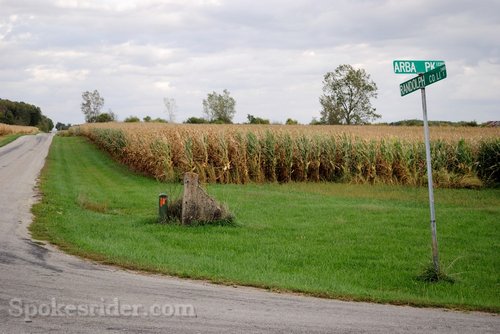
This is a road that still follows the route of the Quaker Trace.

This is a road that still follows the route of the Quaker Trace.

In the early 1800’s the Wrights and the Mills were moving into Randolph County, Indiana along with other Quaker families. They mainly came from the Carolinas. If not directly, than indirectly with a stop in Ohio or Tennessee for a few years. They did not believe in the institution of  slavery and were leaving to come to a state that had banned slavery. At that time, the area was pure forest with no roads of any kind. The early roads were nothing more than trails, traveled almost exclusively by men on foot or on horseback, and marked by blazes made upon the trees by scouting parties. Naturally these parties would follow the lines of least resistance, traveling the high ground, thus avoiding swamps and crossing the streams at the easiest fords. This often necessitated irregular paths to get to these fords. These trails led from one settlement to another or from some community to a mill or to a church.

Wayne County to the south of Randolph County was also being populated at that time by Quakers, Richmond in particular. Many of these Richmond Quakers were merchants who were interested in trade, especially with the Native Americans of Indiana and Ohio. At this same time in Fort Wayne, Indiana a great deal of trade was carried on with the Indians.  The trading post at Fort Wayne dealt in furs, whiskey, and other provisions and supplies. Recognizing that a potential market existed in Fort Wayne, the Richmond Quakers decided to build a road from Richmond to Fort Wayne.  (I use the term loosely because it was not paved, of course.) In 1817 construction began on the “Quaker Trace”, so called because it was cut mainly by Quakers.This was the first regular trail through the county and was a direct route from Richmond to Fort Wayne. This was the county’s first thoroughfare. At that time there was only one house between Spartanburg and Fort Wayne so you can see that this area was still very much a wilderness.

Even though it was only cut wide enough for one wagon to pass, the Quaker Trace was a vast improvement over the early trails and the Wrights and the Mills and their neighbors were able to get to and from Fort Wayne much more quickly to sell or trade whatever they might have to get things they could not get otherwise, e.g. tobacco, needles, iron, kettles, etc. It only took about 5 days instead of the 12 it had previously.

Later on, the Quaker Trace seems to have been a route on the Underground Railroad, thanks to those same Quakers.

Posted in Wright | Tagged , , , , , , , , | 1 Comment

Wright – Mills in Early Randolph County, Virginia

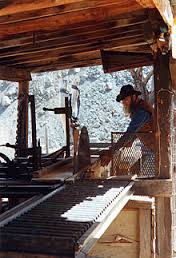
Generic Early Sawmill Example of an early saw mill

“On Sparrow creek a saw-mill was erected (before the Macksville grist-mill was built) by Morgan Mills. He used to saw day and night. He would set his log and start the saw, and then lie down and take a nap. When the saw got through the log, the snapping of the trigger would wake him up, and he would set the log again. That mill went down sixty years or more ago.”  Past and Present of Randolph County, Indiana by John L. Smith and Lee L. Driver, 1914

(The only Morgan Mills this could be is the original Morgan (my fourth great grandfather 1794-1878) because the other three Morgan Mills were too young to fit the time frame.)

The Macksville mill referenced in the first paragraph was owned by several people but Solomon Reece Wright (my third great grandfather, 1802-1888)was reportedly one of them. I don’t yet know the dates he owned it. It will be fun to research further.

Posted in Wright | Tagged , , , , , | Leave a comment

Wright – White River Township and Stoney Creek Township

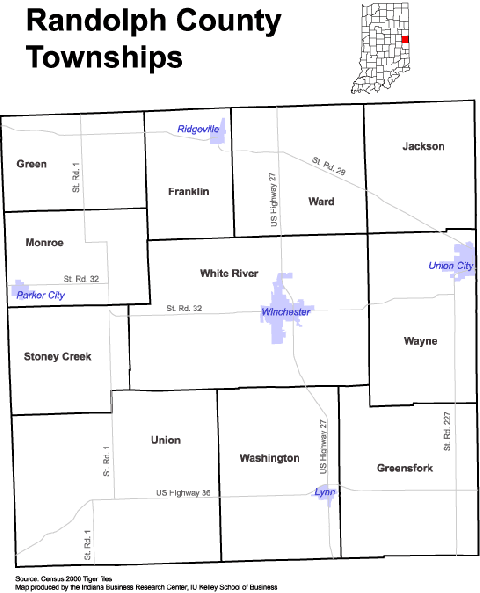
randolph_township_map

In doing research on the Wrights and the Mills, the names of two areas pop up time and again, White River Township and Stoney Creek Township in Randolph County, Indiana. After reviewing successive U.S. Federal censuses, I assumed that my ancestors originally lived in White River Township and then moved to Stoney Creek Township until I researched the history of Randolph County. I found out that the county had only two townships originally because the population was so small at the time. White River Township occupied the north part of the county and Greenfork Township occupied the south. As people moved into the area, land was taken from these two to form more townships.  On 2 July 1827, land was taken from White River Township to form Stoney Creek Township. Stoney Creek Township was further divided even after its original formation as has White River Township been divided several times.  There are currently 11 Townships, all formed from the original two.

So, my family may never have moved from their original locations, the governmental body had just changed. They may have lived in the part of White River Township that eventually became Stoney Creek Township and stayed a part of Stoney Creek Township even as parts of it were taken to form other townships.

Posted in Wright | Tagged , , , , , , | Leave a comment

Wright – Morgan Mills

My head is spinning round and round trying to keep track of all the Morgan Mills we have in our family. At first I was afraid that I had made some mistakes somewhere. But then I drew a diagram and it became clearer.

Elijah Mills (1753-1837) is my 5th great grandfather. He had numerous children, three of which were Jacob Mills (1792-1852), Morgan E. Mills (1794-1878), and Elija Mills Jr. (1804-1895). Jacob and Elijah must have been very fond of their brother, Morgan, because they both named a son Morgan. Jacob’s son is Morgan W. Mills (1844-1922) and Elijah’s son is Morgan Mills (1845-?). Morgan didn’t name any of his son’s Morgan but his son Joseph Mills (1822-1905) had a son that he named Morgan Mills (1846-1894). If you’ve been counting that is four Morgan Mills that I have discovered so far.

The relationships to me were still unclear but Ancestry.com says that Morgan E. Mills (1794-1878) is my 4th great grandfather, Morgan W. Mills (1844-1922) is my 3rd great grand uncle, Morgan Mills (1845-?) is my 1st cousin 5 x removed, and Morgan Mills (1846-1894) is my 2nd great grand uncle.


Posted in Uncategorized | Leave a comment

Wright – Delia N Mills Lowery – 1897 to 2000

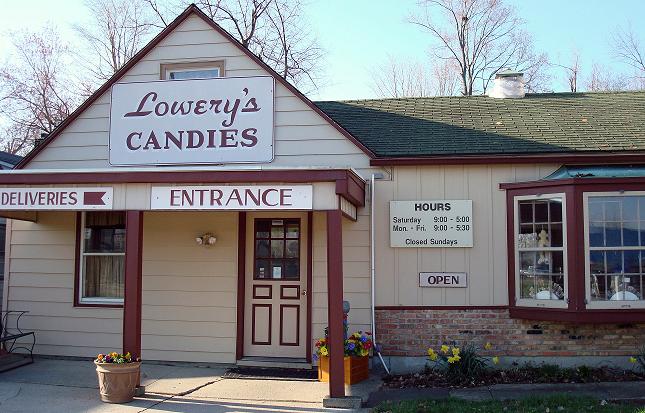
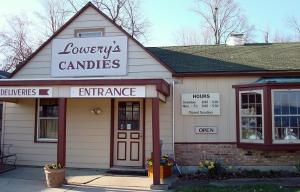
Lowerys_front_of_store_22

One of my maternal grandmother’s favorite aunts was Delia N Mills. She was her mother, Minnie Bell Mills, younger sister and was only four years older than my grandmother. This will be the story of Delia and Lowery’s Candies. It comes from the June 7, 1992 edition of The Muncie (Indiana) Star.

The ‘original’ Lowery; Candy inventor shares her favorite ‘dark secrets’

Perky as a wren, green-eyed, sharp and overflowing with stories, Delia Lowery is “the original Lowery.” More than 50 years ago, she invented the recipes for the Lowery candies which are still sold in Muncie, Anderson, and Kennard.

Dee, her nickname since school days, will be 95 on Sept. 5, but she doesn’t look her age nor fit any stereotype. Slim, interested in everything, she even keeps her hair the same golden brown its always been.

“I think I was 16 when Dad bought our house in Muncie, and I’ve lived here ever since,” she says. “He built Mills Lake and park near Farmland and operated it for 50 years.”

Lowery learned “how to dip chocolates in Johnnie Springer’s candy shop.” She couldn’t make the “throw” or swirl on top correctly and wanted to quit, but her dad wouldn’t let her. The throw tells the flavor of the creme inside the chocolate. “O” stands for orange and “a little snake on top,” according to Lowery, means the creme is peanut butter, for example.

In the early 1930s, Lowery worked for Henry Roller, who had a snack shop and soda fountain at 107 E Jackson St. He made “Dark Secrets,” a delectable dark chocolate candy.

Roller sold Lowery that formula reluctantly, and she began making dark secrets her way, calling them “Chatterbars.” She wanted to start a candy shop. In 1941, her husband, the now late Garrett Lowery, quit “his good job at Chevrolet” to help her realize the dream.

The first year, Dee started making filled Easter eggs, which became great sellers. After cleaning coconut shells they brought back from Florida, the Lowerys used them as molds for the big eggs. They they filled each chocolate shell molded that way with other candies. They put six eggs on display, planning to take orders, but one woman bought them all.

The next year, the Lowerys bought small, medium and large aluminum egg and rabbit-shaped molds. The sold nearly a 1,000 molded candies that year.

“There’s a big difference in kinds of sugar and kinds of chocolate. I bought the best,” Lowery adds. “I didn’t use the same kind of sugar to  make toffee as I did cremes. I taught Garrett, and he became a good candymaker.

“We sold thousands of pounds of candy. People came from all over to buy it. We never closed. I’d get up at 4 a.m. and have three batches made by the time our candy boxer came to work. We had three beaters going in the basement, an depositer for the centers and a big marble slab where a girl made peanut butter centers all day.”

When Garrett Lowery had a stroke, they sold the business to his cousin, Don Brown, and wife Thelma and Garrett’s sister, Pauline Good, and her husband John.

After Dee taught Thelma and Pauline the art of dipping chocolates, the Browns in 1965 moved the candy business to 6019 Kigore Ave. Still in operation there, they continue to use Dee’s candy recipes and the name Lowery’s Candies. Their daughter, Vicky Good, manages that shop and Thelma and son, Michael Brown, also work there. Another daughter comes in from Ohio to help out at extra busy times.

Garrett’s niece, Terry Vickery, manages Good’s Candies, Kennard, and his nephew, John Richard Good, has Good’s Candies in Anderson. Both places use Dee’s recipes.

“I like candy,” Dee Lowery admits, “and dark chocolate, peanut butter cremes, toffee and cherries best of all.”

It’s hard to find her at home. She attends church activities and senior citizen meetings at main Street United Methodist Church. “Lee Browning plays the piano. Lon England sings, and all us senior citizens join in.” she says.

The Lowerys had no children, but her family, including nephews Eddie Mills, Rodger Green, Howard Haworth, Gene Gordon and Lee Brant, help her lead a busy life.

“They’re all so good to me.” she says. In addition to relatives, the other “person” in her life is Tippy, her dog.

In the 1920 United States Federal Census, Delia is the only child left at home at the age of 21. She is listed as a Candymaker. She doesn’t marry Garrett until 1923. I remember a box of Lowery’s candy showing up at my grandmother’s house every Christmas as I was growing up. I never truly appreciated the story behind the candy until now. I wish I had met Delia N Mills Lowery. She seems like quite a woman!

Posted in Wright | Tagged , , , , , , , , | Leave a comment

Wright – George Washington Mills – 1855 to 1956

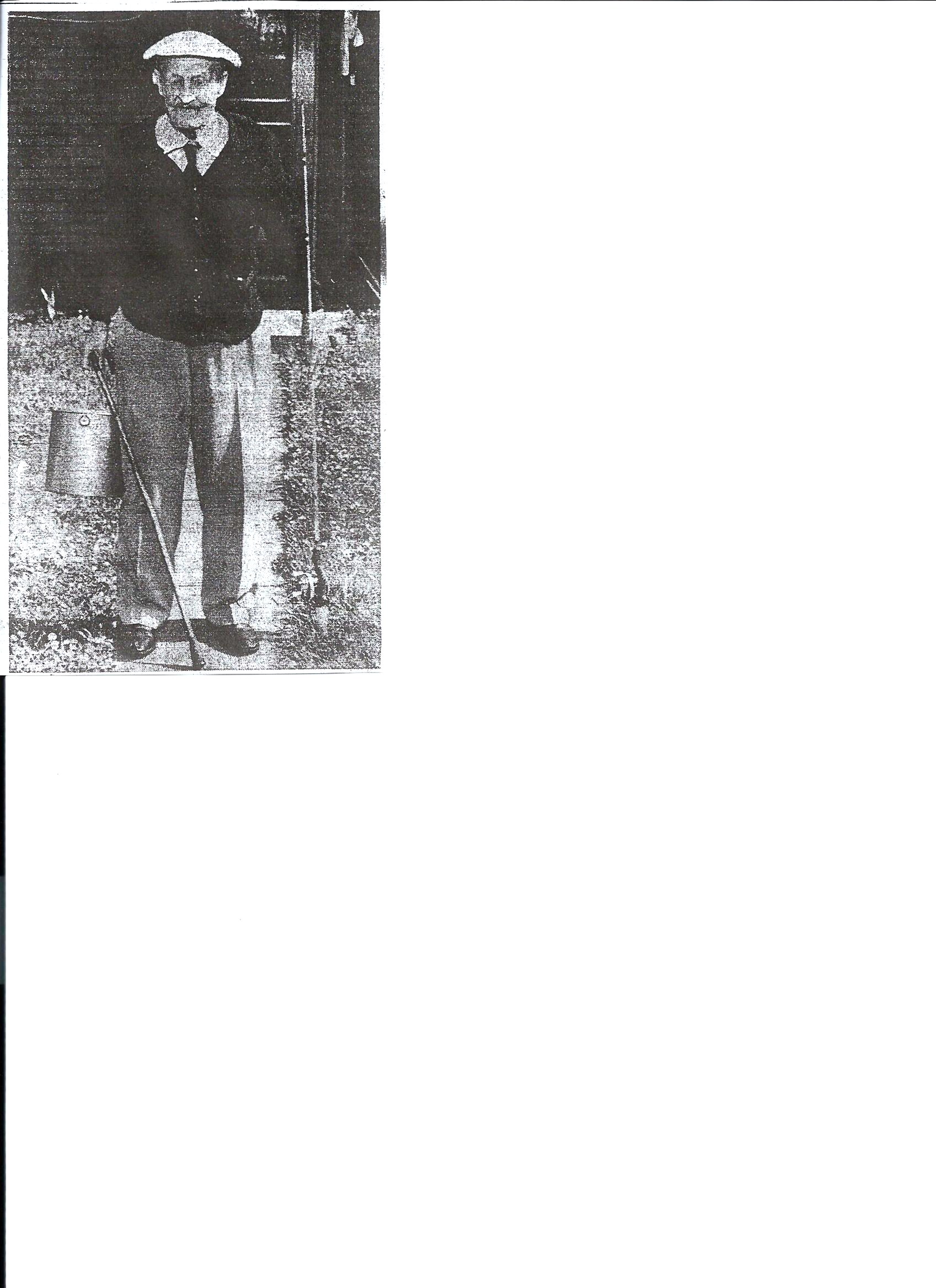
George Washington Mills 100 years oldGeorge Washington Mills (1855-1956) is the brother of my Great Great Grandfather, Jacob Riley Mills. If you see pictures of them you can’t tell one from the other, or at least I can’t. George lived to 101. He got his first job as a log roller when he was 10 years old. Then, he was a farmer for 50 years. Later he became a cement contractor in Farmland, IN. It is said that he built most of the sidewalks in Farmland during that time.

He moved to Muncie IN  in 1905. In 1925 he moved in with his niece, Delia Mills Lowery, one of Jacob’s daughters.  Delia owned and operated a candy company and the last cement job George had was cementing the basement of the candy kitchen. He was 85 years old at that time. He was known by the patrons of the Lowery candy kitchen as “Uncle George”.

He discovered fishing when he retired and became quite a fisherman. On his 100th birthday he went fishing and caught his limit of crappies. He was at the Lowry summer home on Westler Lake near Wolcottville on a Sunday in his 101st year when he was stricken with his final illness. He refused to come home because he wanted to stay and fish some more. He seemed to be improving and on Monday he did some fishing. He was finally convinced to return home to Muncie on Tuesday where he died on Wednesday, 18 July 1956.

Posted in Wright | Tagged , , , , , , , , | Leave a comment

Tennant – William Thadios Tennant – 1910

In 1910, William Thadios Tennant (35) was living on a farm in Township 7, Craig County, Oklahoma with his wife Mattie (31), son Ethmer (12), son Aubrey (10) (my maternal grandfather), and daughter Loy, (7 mos). Township 7 is near Vinita, OK. According to the 1910 Federal Census this was the first marriage for both William and Mattie. Also, the census tells us that Mattie had 5 children with only 3 still living in 1910. William and Mattie had been married 13 years so it appears that they had Ethmer right away and then Aubrey two years later. The two children who didn’t survive had to have been born between Aubrey and Loy since there is about a nine years difference. They would go on to have one other son, William, who was born with Down Syndrome approximately 10 years after Loy.  I don’t ever remember my grandfather talking about the two siblings who passed early but he must have been aware of them. We also learn from the census that William was a farmer and William and Mattie owned the farm outright.

Posted in Tennant | Tagged , , | Leave a comment